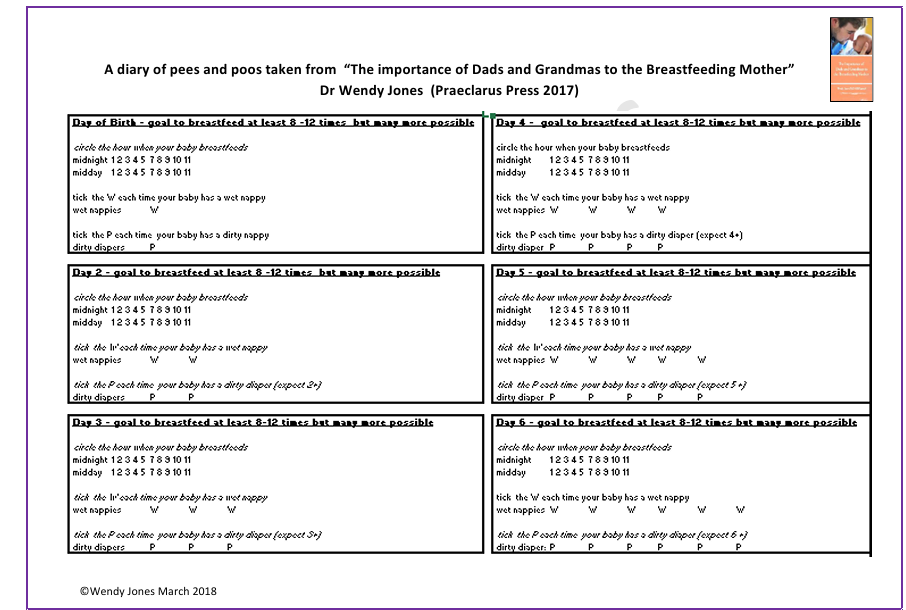
During my presentation to LLL Ireland I was asked where was it possible to obtain a copy of the pee and poo chart I mentioned. This is from my book The importance of Dads and Grandmas to the Breastfeeding Mum. Hope it helps Mums, Dads and Grandparents keep track of adequate breastfeeds and output to ensure the baby is getting enough milk.
If there are not as many pees and poos you need to call for help from an expert in breastfeeding sooner rather than later to check the attachment is as good as it can be and baby is taking milk.
A diary of pees and poos taken from The importance of dads and grandmas to the breastfeeding mother
Constipation in the neonate is a topic apparently rarely discussed in medical sources and may be
seen as the domain of the health visitor or midwife. However, many “constipated” babies may be
seen by their GP.
Newborn babies have multiple stools per day. Most breastfed babies pass a stool between three to
five times per day. For formula-fed babies, the number of stools is usually between two to four per
day (Blackmer 2010). Before considering treatment it is important to discuss how feeding and weight
gain are going, and any recent changes. Take particular note if the mother reports that breastfeeding
is painful, if baby is sleepy, or if there are any difficulties with feeding.
CKS Constipation in Children https://cks.nice.org.uk/constipation-in-children
‘The expert opinion of previous external reviewers of this CKS topic is that constipation is less likely in
exclusively breastfed babies, although bowel actions may be infrequent [ed. after 4-6 weeks].
Lack of stools / constipation in a breastfed baby
Breastfeeding and Medication
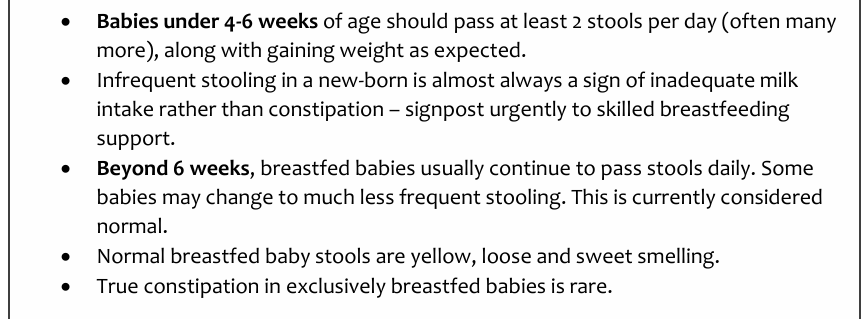
- Babies under 4-6 weeks of age should pass at least 2 stools per day (often many
more), along with gaining weight as expected. - Infrequent stooling in a new-born is almost always a sign of inadequate milk
intake rather than constipation – signpost urgently to skilled breastfeeding
support. - Beyond 6 weeks, breastfed babies usually continue to pass stools daily. Some
babies may change to much less frequent stooling. This is currently considered
normal. - Normal breastfed baby stools are yellow, loose and sweet smelling.
- True constipation in exclusively breastfed babies is rare.
Distress or other features are better clinical indicators of true constipation. It may be appropriate to
monitor an otherwise well, thriving breastfed baby before deciding whether treatment for
constipation is indicated.’
Although it is easy to consider medication first line to resolve lack of stooling/constipation, this
should be avoided until breastfeeding has been optimised.
The Newborn
In the first few days after birth, the baby passes meconium: dark and tarry stools, made of
materials ingested in utero. Colostrum (early milk) is a natural laxative and helps the infant to
pass the first stool.
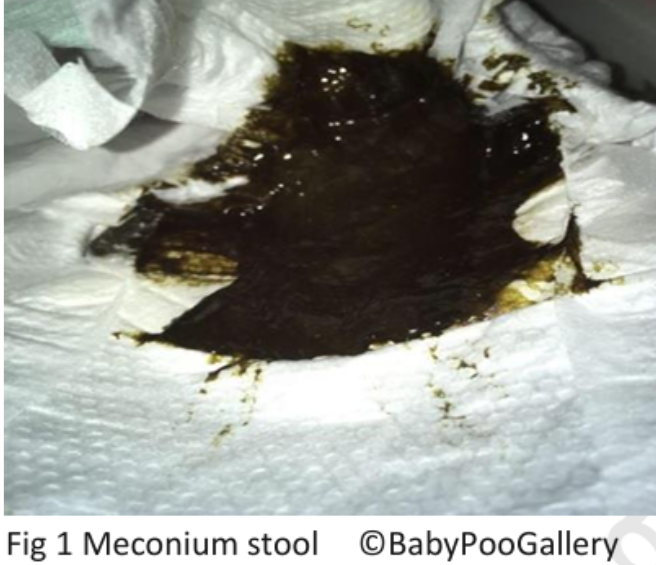
Fig 1 Meconium stool ©BabyPooGallery
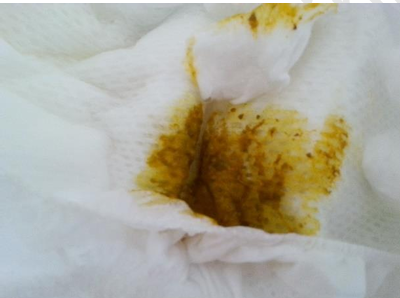
Fig 2 Stool after milk has ‘come in’ approx. day 3 ©Wendy Jones
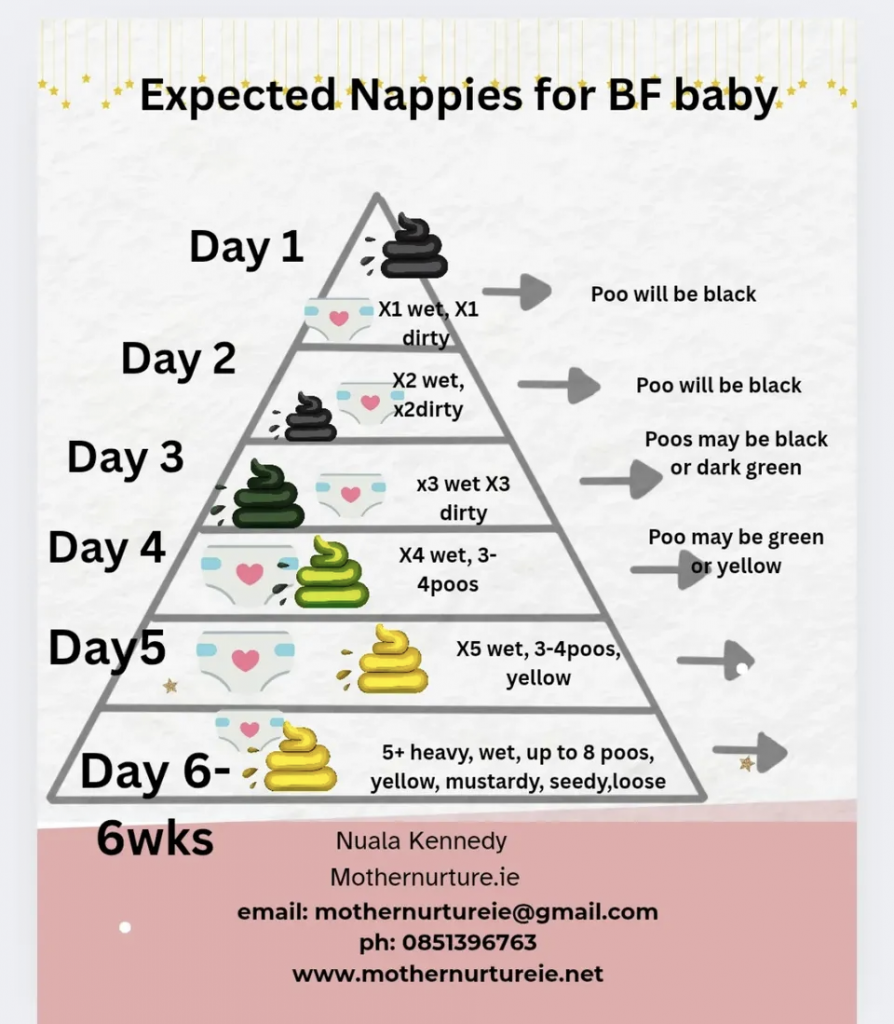
As the mother’s milk volume increases, the baby’s stool colour and consistency changes. An
exclusively breastfed baby will produce loose and unformed motions of a dark-green colour
that changes gradually to a mustard-yellow, sweet-smelling motion by day 4. (See La Leche
League, NCT, Baby Poo Gallery for images).
©Dr Wendy Jones MBE Pharmacist Breastfeeding and Medication
www.breastfeeding-and-medication.co.uk
June 2020 The information on this sheet is based upon my professional experience as a pharmacist with a
specialised interest in the safety of drugs in breastmilk, supported by evidence from expert sources. However, I
cannot take responsibility for the prescription of medication which remains with the healthcare professionals
involved. I am happy to discuss the evidence by email wendy@breastfeeding-and-medication.co.uk
Breastfed babies should produce frequent bowel movements in the early days. Formula-fed
babies have stools which are much more formed and smell less sweet. Much information can
be gleaned from the appearance of baby bowel motions.
What does lack of stools in a breastfed baby suggest?
Lack of stools/infrequent stools in the early days is almost always a sign that a baby is not
receiving enough milk. Constipation should never be considered until other more common and
concerning issues have been explored. It is a signal for urgent referral for a breastfeeding
assessment, such as to a local specialist or one of the breastfeeding helplines. If the baby is not
producing frequent wet nappies either, then admission to hospital may also be needed to ensure
that the baby receives essential nutrition and hydration.
An orange or red, brick-dust coloured stain in the baby’s nappy in the first couple of days after
birth is normal and a sign of urate crystals. The timely change to yellow motions is a sign that
feeding is progressing well. ‘Brick dust’ nappies or green stools after the first few days should
prompt urgent breastfeeding assessment.
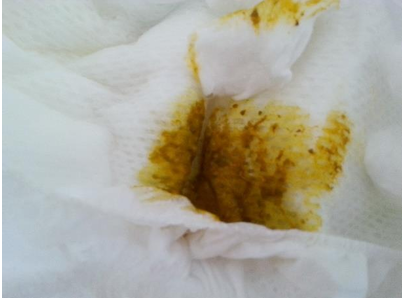
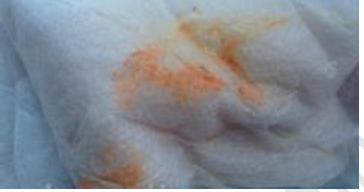
Fig 3 Urate crystals in urine (brick dust) Image taken from Google Images.
After 4-6 weeks
After this age, some breastfed babies may pass stools less frequently. Some babies go several
days without stooling. If the stool is soft and yellowish and the baby is otherwise well and gaining
weight as expected, there is no concern.
It is also normal for babies to strain or even cry when opening their bowels, which is a sign of
infant dyschezia – a normal phenomenon in babies that requires no medical intervention. The
baby is not ‘constipated’ as long as their stools are soft, even if they have not passed one for a
few days.
Sodium alginate (Gaviscon™)
If a baby has been given Infant Gaviscon™ they may become constipated. Medication for reflux is
often given unnecessarily. Please see https://www.breastfeedingnetwork.org.uk/reflux/
Formula fed babies and constipation
If a formula fed baby is constipated, it is important to ensure that the caregiver is sensitively
provided with information about how to prepare and offer bottles. This information from Unicef
may be helpful: https://www.unicef.org.uk/babyfriendly/baby-friendly-resources/bottle-feeding
resources/guide-to-bottle-feeding/
Table with information for parents regarding nappies in a new-born baby, from
UNICEF 2010
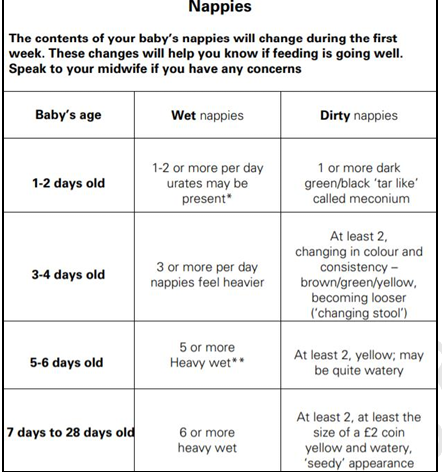
*Urates are a dark pink/red substance that many babies pass in the first couple of days. At this age
they are not a problem, however if they go beyond the first couple of days you should tell your
midwife as that may be a sign that your baby is not getting enough milk.
** With new disposable nappies it is often hard to tell if they are wet, so to get an idea if there is
enough urine, take a nappy and add 2-4 tablespoons of water. This will give you an idea of what to
look/feel for.
References
- Blackmer AB, Farrington EA. Constipation in the pediatric patient: an overview and
pharmacologic considerations. Journal of Pediatric Health Care. 2010;24(6):385–399)
https://www.jpedhc.org/article/S0891-5245(10)00263-4/fulltext - NHS Choices. (2016b) How to change your baby’s nappy. Available from:
https://www.nhs.uk/conditions/pregnancy-and-baby/nappies/ NICE. (2019) Clinical
Knowledge Summaries. Constipation in children. Available from:
https://cks.nice.org.uk/constipation-in-children#!diagnosissubNICE CG 99 (2017).
©Dr Wendy Jones MBE Pharmacist Breastfeeding and Medication
www.breastfeeding-and-medication.co.uk