Having a PET scan is scary because it is often associated with a possible diagnosis of cancer, something which as mothers we probably fear most. It is important to take one day at a time and not leap ahead – not the easiest thing to do I know. If possible, store some milk in advance to feed your baby whilst you are seperated. This factsheet contains data on the process of having a scan, preparation and breastfeeding all taken from expert sites which I hope helps.
If the diagnosis does turn out to be cancer then the wonderful organisation Mummy’s Star offer amazing support and deserve more recognition https://www.facebook.com/MummysStar
If you need chemotherapy, I can provide information on how long the drug stays in your system. Some mothers have expressed a desire to pump and dump their milk to maintain a supply until they can feed again. Others plan to relactate at the end of treatment. I will do my best to support your decision.
But for today let’s concentrate on the PET scan and continuing to feed your nursling.
PET Scans and Breastfeeding Factsheet
Positron emission tomography (PET) scans produce detailed 3-dimensional images of the inside of the body. PET scans are particularly helpful for investigating confirmed cases of cancer to determine how far the cancer has spread and how well it’s responding to treatment. PET scans are sometimes used to help plan operations, such as a coronary artery bypass graft or brain surgery for epilepsy.
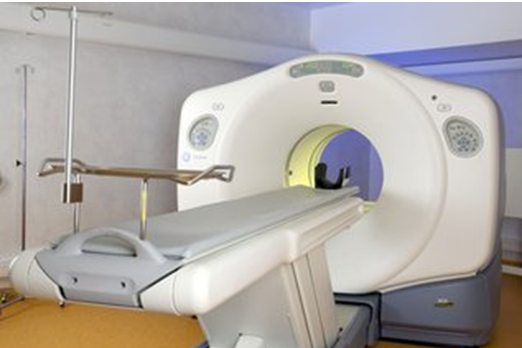
PET scanners work by detecting the radiation given off by a radiotracer injected into the as it collects in different parts of the body. In most PET scans a radiotracer called fluorodeoxyglucose (FDG) is used, which is similar to naturally occurring glucose (a type of sugar), so the body treats it in a similar way. By analysing the areas where the radiotracer does and does not build up, it’s possible to work out how certain body functions are working. For example, using FDG in the body’s tissues can help identify cancerous cells because they use glucose at a much faster rate than normal cells. (https://www.nhs.uk/conditions/pet-scan/).
Preparation for PET Scan
Being asked to take a PET scan is likely to cause a lot of stress especially if cancer is suspected. If you are currently breastfeeding the anxiety on preparation is going to add to this. If time allows, expressing and storing milk in advance enables your baby to receive your milk in the time that your baby has to be separated from you.
Some women find it easier to hand express milk (https://www.unicef.org.uk/babyfriendly/baby-friendly-resources/breastfeeding-resources/hand-expression-video/) others to use one of the brands of pump available commercially. You may be able to hire a hospital grade pump. Contact details are available from search engines or your health visitor.
Milk can be stored in a freezer or fridge depending on the time in advance that you have. https://www.breastfeedingnetwork.org.uk/wp-content/pdfs/BFN%20Expressing%20Leaflet%202019.pdf
Avoid strenuous activity for 24 hours before the scan. For FDG PET scans you will not be able to eat anything six hours before the appointment. During this time, you can drink as much water as you like. You will be asked to remain lying down for an hour after your injection while it is absorbed into your body before transferring to the scanning room.
Scans can take between 30 and 60 minutes but possibly up to 120 minutes but the procedure is as an outpatient so you can leave afterwards but avoid contact with your child/children whilst the radioactivity decays. The procedure is not painful, but you may feel slightly claustrophobic. The radiology department team will keep talking to you throughout the procedure to reassure you and tell you what is going on.
You may need to express your milk during this period for comfort and to maintain your supply. Once the 9 hours has passed after the procedure you could use the milk, but most mothers prefer to only use in the bath or to discard it.
After the PET Scan.
As a precaution, you may be advised to avoid close contact with your baby and other children for a few hours after having a PET scan. This is because you’ll be slightly radioactive during this time. The time during which you should restrict contact and especially breastfeeding depends on the dose used https://www.ncbi.nlm.nih.gov/books/NBK501716/
The radiotracer becomes quickly less radioactive over time and will usually be passed out of your body naturally within a few hours. Drinking plenty of fluid after the scan can help flush it from your body.
Pharmacokinetics of Fludeoxyglucose F 18 (FDG)
The half-life of the F-18 is short, only 110 minutes. At 9 hours, 98.5% of the radioisotope remaining in the tissues would be decayed away. [Jones SC, Alavi A, Christman D, Montanez I, Wolf AP, Reivich M. The radiation dosimetry of 2 [F-18] fluoro-2-deoxy-D-glucose in man. J Nucl Med. 1982;23(7):613-617. https://pubmed.ncbi.nlm.nih.gov/6979616/] It is likely that after 9 hours, almost all radioisotope would be decayed to almost background levels . Recommend pumping and dumping of breast milk after the procedure for at least 4-9 hours to minimize radiation.[Leide-Svegborn S. Radiation exposure of patients and personnel from a PET/CT procedure with 18F-FDG. Radiat Prot Dosimetry. April-May 2010;139(1-3):208-213. Epub February 18, 2010. https://pubmed.ncbi.nlm.nih.gov/20167792/]
Because the infant receives more radiation from close contact with the breast, close contact should be avoided for about 4 hours and minimized close contact for the next 10 hours, due to release of gamma radiation from the mother. (Hale Medications and Mothers Milk).
You will be given the results by your consultant some time later when the results have been analysed by an expert. All that I can suggest is take one day and a time and trust your team.